Beauty, order, and chaos: the challenge of going global
by Aline Veiga
Managing Partner, Neorama
Architect | ICF Certified Coach
At my core, I am an architect. And like most architects, I am driven by two things simultaneously: beauty and order. Not one without the other—both, always together, in tension. That combination has shaped everything about how I work: the way I run a project, how I build a team, what I notice when I walk into a room. It has also, somewhat unexpectedly, become the filter through which I’ve been expanding my company internationally.
For most of my career, I’ve lived happily inside creative environments. Delivering ambitious visual productions—the kind that demand precision and imagination in equal measure—while structuring the processes that make them possible. Getting complex projects across the finish line, on time, on brief, and with the exactness of a Swiss watch. That’s where I feel most like myself.
So how did someone like me end up in business development?
Slowly, then all at once. Neorama, a company I’ve helped build from the ground up, has been operating for over 20 years. We’ve built something genuinely rare: a team that creates immersive showrooms for real estate developers across Brazil and internationally. Work that changes how customers connect emotionally with spaces that don’t exist yet, work that increases the property’s perceived value and, consequently, accelerates pre-construction sales. Work we’re proud of. At some point, it became obvious that more of the world needed to know about it. And someone had to step forward and tell our story.
That someone turned out to be me.
What followed has been one of the most challenging, and honestly, most humbling stretches of my professional life. International expansion sounds strategic and well-orchestrated from the outside. From the inside, it’s quite the opposite. Every market has its own unwritten rules. Every culture has its own relationship with time, trust, and the way decisions are actually made. The tools that work in São Paulo don’t necessarily work in Madrid or Montreal. The pitch that lands in one room falls flat in the next.
I had to learn everything from scratch. I wondered whether customer relationship management (CRM) actually helps. How much a LinkedIn post matters (debatable). How much a real conversation over coffee matters (a lot). How to approach people without sounding like a salesperson. What it means to market yourself without losing yourself in the process. I’ve made mistakes I wouldn’t have made in production—where I knew the playbook—and I’ve had to get comfortable with that.
The thing no one really tells you about expanding globally is that it’s not just a business challenge. It’s a personal one. It asks you, repeatedly, who you are when the corporate structure runs out.
Here’s what I’ve come back to, every time: my belief in what we actually do.
The projects we work on are not just deliverables. They are spaces where people will live, raise families, and build memories. When we help a developer communicate the soul of a building that doesn’t exist yet, when we make someone feel at home somewhere before a single wall has been built, that’s not a content production job. That’s a responsibility. And I’ve always felt that weight.
What I’ve realized, somewhere along this journey, is that the thing that made me feel least equipped for business development—my obsession with doing things right, my insistence on beauty and order, my inability to be comfortable with “good enough”—turned out to be my greatest strength, allowing me to determine exactly who I was willing to work with.
I don’t want to close deals for projects I wouldn’t be proud of. I don’t want to pitch companies that see their buildings as financial instruments and nothing more. I want to work with people who understand that what you build (and how you build it) leaves a mark on people’s lives and on the cities they live in. That’s the conversation I want to be having.
So my role in all of this, as I’ve come to understand it, is not to chase volume. It’s to serve as a conduit, making sure the right prospects are exposed to what we do, share the same conviction, and choose to build something they will genuinely be proud to leave behind.
This journey is still very much in progress. I am still learning, still adjusting, still humbled by how much I don’t know. But I’ve stopped seeing that as a problem.
The Swiss watch accuracy still matters. It just has to coexist now with a greater tolerance for the beautiful chaos of building something new—in markets I’m still getting to know, with people whose trust I’m still working to earn.
Beauty and order, after all, rarely arrive at the same time. But they’re worth waiting for.
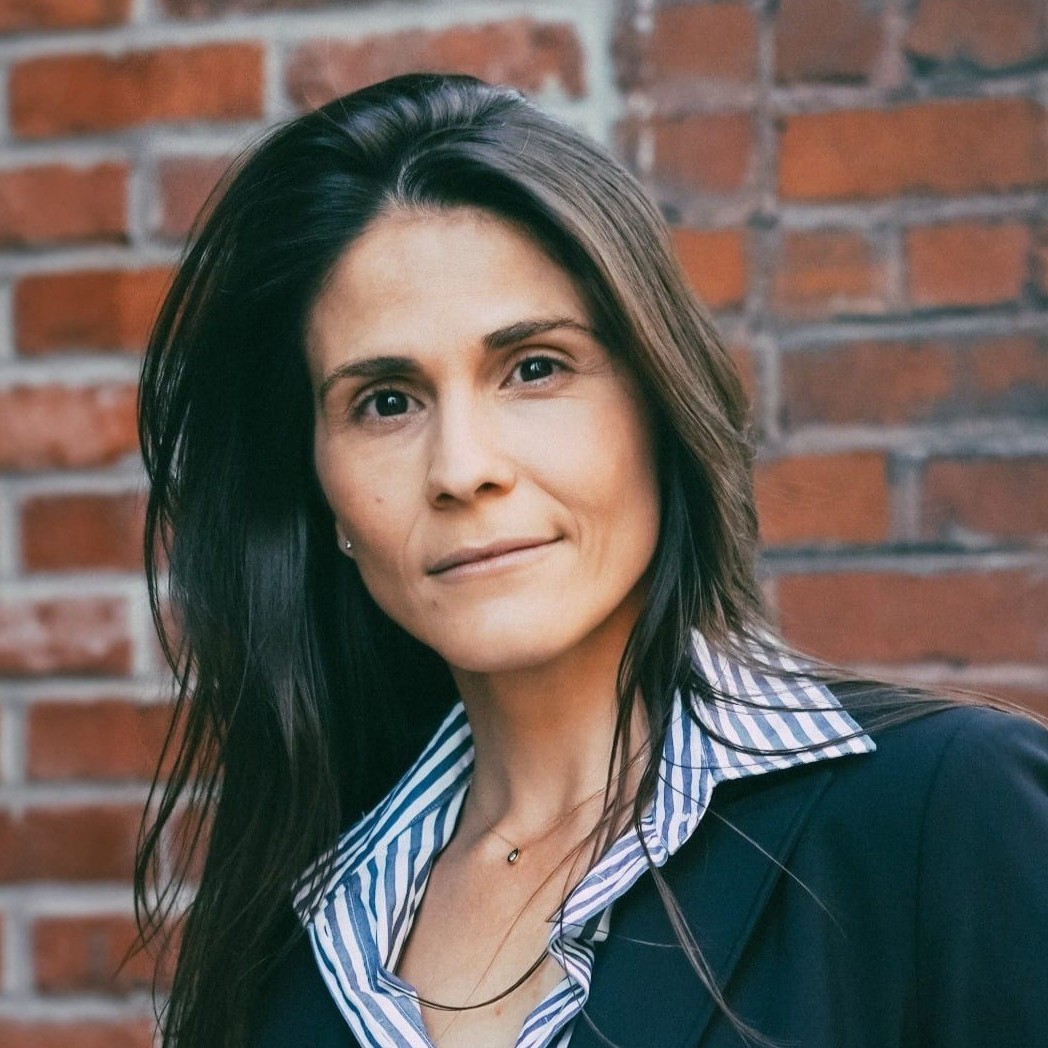
by Aline Veiga
Managing Partner, Neorama
Architect | ICF Certified Coach
Aline Veiga is Managing Partner at Neorama, a company specializing in architectural visualization and immersive experiences for the real estate sector. An architect by training, she brings over twenty years of experience in CGI project management and leads international business development across North America, Europe, and the Middle East. She is also an ICF Certified Business and Executive Coach.